Thinking about selling your Bucks County horse farm at a premium? The right prep can add real dollars to your bottom line and prevent last‑minute surprises. You know a good barn from a great one, but buyers, lenders, and townships will expect specific documents, inspections, and proof of safe, functional equine facilities. In this guide, you’ll get a clear, step‑by‑step plan tailored to Bucks County and neighboring Montgomery and Chester Counties so you can move from “thinking about listing” to “ready for top offers.” Let’s dive in.
Start with a regulatory and document audit
Getting your paperwork in order sets the tone for a smooth sale and faster buyer decisions.
Gather core property records
Have a clean, well‑labeled folder ready for buyers and their advisors. Include the deed, any title encumbrances, a recent tax bill, and a survey with boundary pins. If your property is enrolled in Pennsylvania’s preferential tax program, add your Clean & Green certificate. Clean & Green typically requires 10 acres for use‑value assessment or a smaller parcel with demonstrated farm income. Review eligibility rules and rollback implications using the state overview for Clean & Green.
If your farm is preserved, provide the conservation easement language and maps. Bucks County’s program materials explain how easements run with the land and limit future uses. Share a copy of the recorded easement from Bucks County Agricultural Land Preservation.
Septic, well, and utilities docs
Buyers will ask for a recent septic pumper report and a certified well water test. Many townships track these items. For example, Doylestown Township publishes a septic management program that describes inspection and pumping schedules. Keep your receipts and lab reports handy so lenders and buyers can check the boxes.
Manure and nutrient plans
Under Pennsylvania’s nutrient rules, horse operations may require a written manure management plan, and higher animal density can trigger an Act 38 Nutrient Management Plan. Because plan drafting and approvals can take weeks to months, start early. Penn State’s summary of Act 38 planning and regulations outlines thresholds and options. You can also contact the Bucks County Conservation District for local guidance and forms at Manure & Nutrient Management Regulations.
Order technical inspections early
Pre‑listing inspections reduce renegotiations and help you price with confidence.
Barn structure and fire safety
Schedule a structural evaluation of your barns and outbuildings. Ask the inspector to check roof framing, post bases, ridge beams, and any hay lofts. Fire protection is equally important. Document detector placement, extinguisher service, and any lightning protection. Larger or public‑access barns often face higher expectations for detection or suppression under NFPA 150 guidance. A practical summary of barn fire risks and features appears here: NFPA 150 requirements and best practices.
Electrical and lighting
Have a licensed electrician inspect all barn circuits, panels, and fixtures. Correct exposed splices, damaged conduit, and non‑rated fixtures in dusty or damp areas. Keep the written report for your seller dossier and buyer review.
Arena, footing, and fencing
Document your arena’s base profile, drainage, and surface composition, plus your dragging and watering routine. Buyers care as much about the base and drainage as they do about the top layer. For a shared language with buyers and trainers, refer to Penn State’s guidance on riding arena footing selection and management. Walk your perimeter and cross‑fencing, tighten or replace loose boards, and confirm gate operation.
Functional fixes buyers notice
Focus first on safety and daily usability. These items often make the strongest impression and justify premium pricing.
Safety and system priorities
- Repair roof leaks, replace rotten posts, and clear damp hay from lofts.
- Update barn wiring to safe standards and replace broken fixtures.
- Mount ABC extinguishers, remove fuels and chemicals from livestock areas, and post no‑smoking signage. Keep service records.
- Pump the septic and complete a current well test. Many townships and lenders will ask for these documents.
Equine infrastructure value drivers
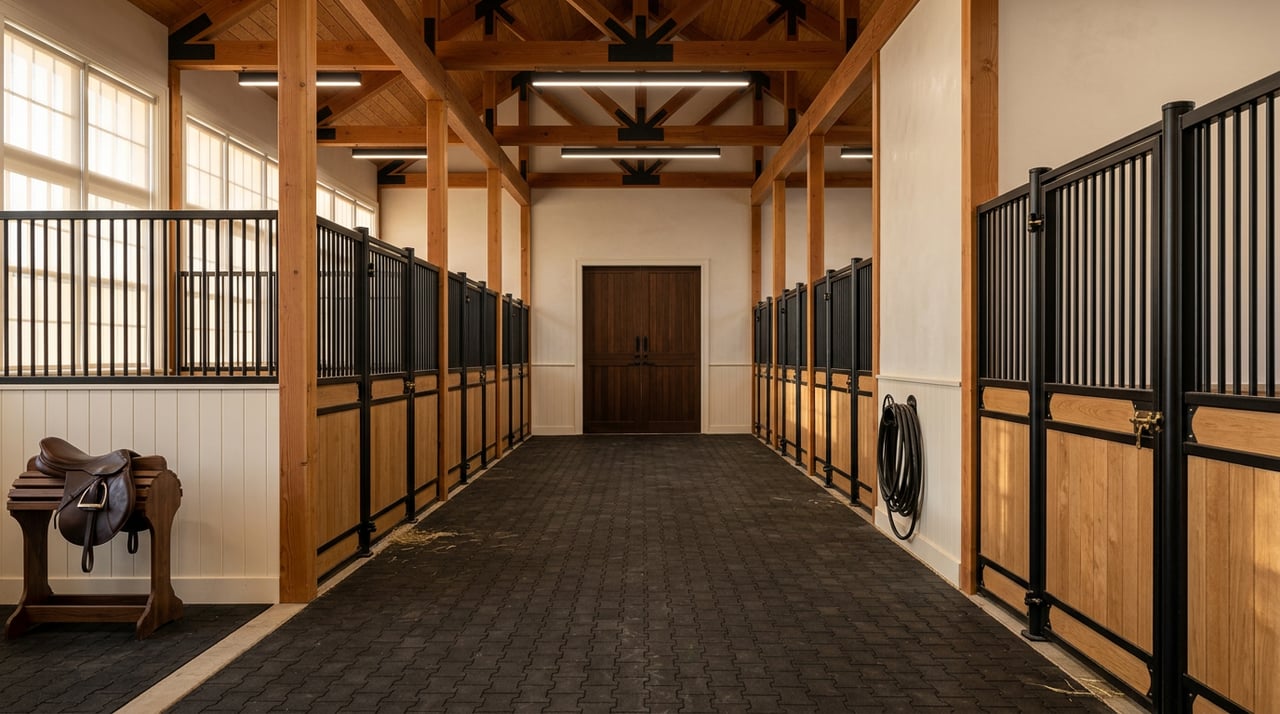
- Stalls: Provide dimensions, matting, ventilation details, and a quick inventory of tack, feed, and wash stalls.
- Fencing: Buyers pay attention to safety and visibility. Tidy, well‑maintained board or post‑and‑rail fencing reads as move‑in ready.
- Turnout and mud control: Improve drainage around gates and feeding areas. Consider an all‑weather sacrifice paddock. Penn State offers a clear overview of mud‑free turnout design.
- Arena footing and drainage: Level, top up where thin, and document the base and maintenance schedule. See arena footing guidance for common surfaces and maintenance.
Clean, stage, and photograph
- Deep clean the barn, tack, and storage areas. Remove old bedding, sweep cobwebs, and stack hay neatly away from aisles.
- Mow driveway edges and trim pasture fronts for curb appeal.
- Book professional photography and drone imagery after tidying. Include barn interiors, paddocks, and a short ride‑through video of the arena.
Regulatory and environmental due diligence
Address these items up front to prevent delays and protect your price.
Clean & Green and easements
If you are enrolled in Clean & Green, disclose it and share the certificate. The program can reduce taxes but includes rollback terms if use changes. Review the state overview for Clean & Green. If the property is preserved, provide the full easement and maps from Bucks County Agricultural Land Preservation. Buyers will want to understand permitted uses before making an offer.
Permits and the UCC
Pennsylvania’s Uniform Construction Code includes an agricultural building category, but the exemption does not apply when a building has habitable space or public access. Disclose any barn conversions or unpermitted improvements and confirm requirements with your municipal code official. You can reference the statute text for context at the Pennsylvania Construction Code Act on the state legislature site.
Floodplains, wetlands, and soils
Be ready to answer flood risk questions. Check FEMA’s Map Service Center for official flood mapping at the FEMA Flood Map Service Center. For soils that influence septic suitability, arena base design, and pasture productivity, pull a quick map from USDA NRCS’s Web Soil Survey. Save PDFs for your seller dossier.
Insurance and liability
If you boarded horses, taught lessons, or hosted clinics, buyers may ask about insurance and past claims. Provide declarations for commercial equine liability or farm package coverage if applicable. This helps buyers assess operational readiness and risk.
Pricing, marketing, and buyer expectations
High‑quality marketing paired with accurate answers wins serious showings and stronger offers.
What equestrian buyers ask
- Stall count and dimensions; aisle width and ventilation.
- Number of paddocks, approximate acreage per turnout, and fence type with last replacement.
- Arena size, footing type, base description, and maintenance routine.
- Hay storage capacity, hot water availability, 220V service, and tack storage.
- Well flow rate and septic capacity.
- Manure management approach and whether a nutrient plan is in place.
- Recorded easements, road or access agreements, and any deed restrictions.
Marketing that works
- Targeted syndication to farm and land channels plus MLS land and hobby‑farm categories.
- Professional photos, drone acreage shots, and short video tours that show how the property works day to day.
- A polished seller dossier with survey, septic and well reports, inspection summaries, and facility features makes it easy for buyers and lenders to move quickly.
Timelines to plan around
- Cosmetic touch‑ups, staging, and photography: 1 to 4 weeks.
- Inspections and small repairs: 2 to 8 weeks depending on contractor availability.
- Manure or nutrient plan drafting and review when required under Act 38: often up to about 90 days. See Penn State’s overview of Act 38 planning and regulations for process context.
Ballpark cost cues
- Fencing: Many horse‑safe board or post‑and‑rail systems fall around 10 to 30 dollars per linear foot installed. Site prep, terrain, and material choice drive totals.
- Arena footing: Surface material alone can range roughly 2 to 10 dollars per square foot depending on depth and additives. Indoor or fully enclosed arenas often run much higher overall. See arena footing guidance for surface considerations.
- Mud mitigation: All‑weather paddocks using geotextile and aggregate can run several thousand to tens of thousands based on size and drainage work. Penn State’s mud‑free turnout guide explains design options.
Pre‑listing checklist
Use this short plan to organize work and paperwork.
Immediate: days 0 to 14
- Order a septic pump and report, a certified well test, and a licensed electrician’s barn inspection.
- Book a basic barn and roof walkthrough to identify repairs.
- Gather the deed, survey, Clean & Green paperwork, and any easement documents.
- Declutter and deep clean barn interiors; repair obvious fence breaks; mow lanes and trim edges.
- Schedule professional photos and drone imagery after tidying.
Near term: weeks 2 to 8
- Fix urgent safety items such as exposed wiring, broken boards, and loose stall doors.
- Complete minor roof and structural repairs; get quotes for arena leveling and top‑ups if needed.
- If Act 38 or manure planning may apply, start early with the Bucks County Conservation District and your consultant.
- Confirm zoning and permit status for barns, arenas, and any habitable spaces with your municipal Zoning Officer. Document any unpermitted work and planned remedies.
Build your seller dossier
- Survey, deed, title information, Clean & Green certificate, and any conservation easement.
- Septic pumper report and well test.
- Electrician and structural inspection summaries.
- Manure or nutrient plan documents or a brief written summary of your current practices.
- List of recent repairs and contractor invoices, plus insurance declarations and boarding agreements if you operated commercially.
Common red flags to address
- Unpermitted living space in barns or unpermitted conversions that impact UCC compliance.
- Inadequate manure management or signs of runoff to streams.
- Failing septic systems or problematic well test results.
- Barn fire risks such as faulty wiring, moldy hay, or poor emergency access.
Your next step
A premium sale comes from expert prep, clear documentation, and marketing that tells the right story to the right buyers. If you want a confidential, step‑by‑step plan tailored to your farm and timeline, connect with Petrina Calantoni Unger to align inspections, documents, and targeted marketing that reach serious equestrian buyers across Bucks County and beyond.
FAQs
What documents should I have ready before listing a Bucks County horse farm?
- Prepare the deed, survey, Clean & Green certificate if enrolled, any conservation easement, septic pumper report, well test, inspection summaries, and a manure or nutrient plan if applicable.
How does Clean & Green affect the sale of a Pennsylvania horse farm?
- Clean & Green can lower taxes but may trigger rollback taxes if use changes; it typically requires 10 acres or a smaller parcel with qualifying farm income, so disclose enrollment and share documentation.
Do I need a manure or nutrient plan to sell my horse property in PA?
- Many operations need a written manure management plan, and higher animal density can require an Act 38 Nutrient Management Plan, so verify thresholds and start early if approvals are needed.
Which arena and fencing details matter most to equestrian buyers?
- Buyers ask about arena size, footing type, base and drainage, fence material and condition, and the age of recent replacements, plus stall size and matting.
How long does it take to get a horse farm market‑ready?
- Plan 1 to 4 weeks for cleaning and media, 2 to 8 weeks for inspections and small repairs, and up to about 90 days for nutrient plan drafting and approvals when required.
Are Pennsylvania barns exempt from building permits under the UCC?
- Typical agricultural buildings may qualify for exemptions, but the exemption is lost if a building includes habitable space or public access, so confirm with your municipal code official.