Are you drawn to homes that feel nothing like a standard box on a standard street? In Bethlehem, converted homes and loft-style residences offer exactly that: architecture with history, distinctive materials, and a setting shaped by the city’s long tradition of reuse. If you are considering this kind of property, understanding the appeal, the tradeoffs, and the local rules can help you buy with more clarity. Let’s dive in.
Why Bethlehem suits converted living
Bethlehem is an unusually strong match for buyers who want a home with character. The city describes itself as a place where colonial and industrial history now sits alongside an economic and cultural renaissance, and that identity shows up clearly in its housing stock.
Adaptive reuse is not treated as a fringe idea here. Bethlehem’s planning materials specifically frame preservation and reuse as part of economic and community development, and the city notes that many adaptive reuse projects have already brought new life to both the North Side and South Side downtown areas.
That matters if you are shopping for a loft or converted home. In many places, these properties feel rare or one-off. In Bethlehem, they fit into a broader local pattern.
What converted homes look like
Converted homes and loft-style spaces in Bethlehem often begin with buildings that were designed for a very different purpose. City materials point to examples like portions of the Laros Silk Mill converted to residential units, a former warehouse turned into 13 multifamily dwellings, and a former church and retail building proposed for two residential apartments.
That range tells you something important. A converted property in Bethlehem may come from an industrial, commercial, or institutional past, which means the final home can feel very different from a newly built residence.
Expect original materials and details
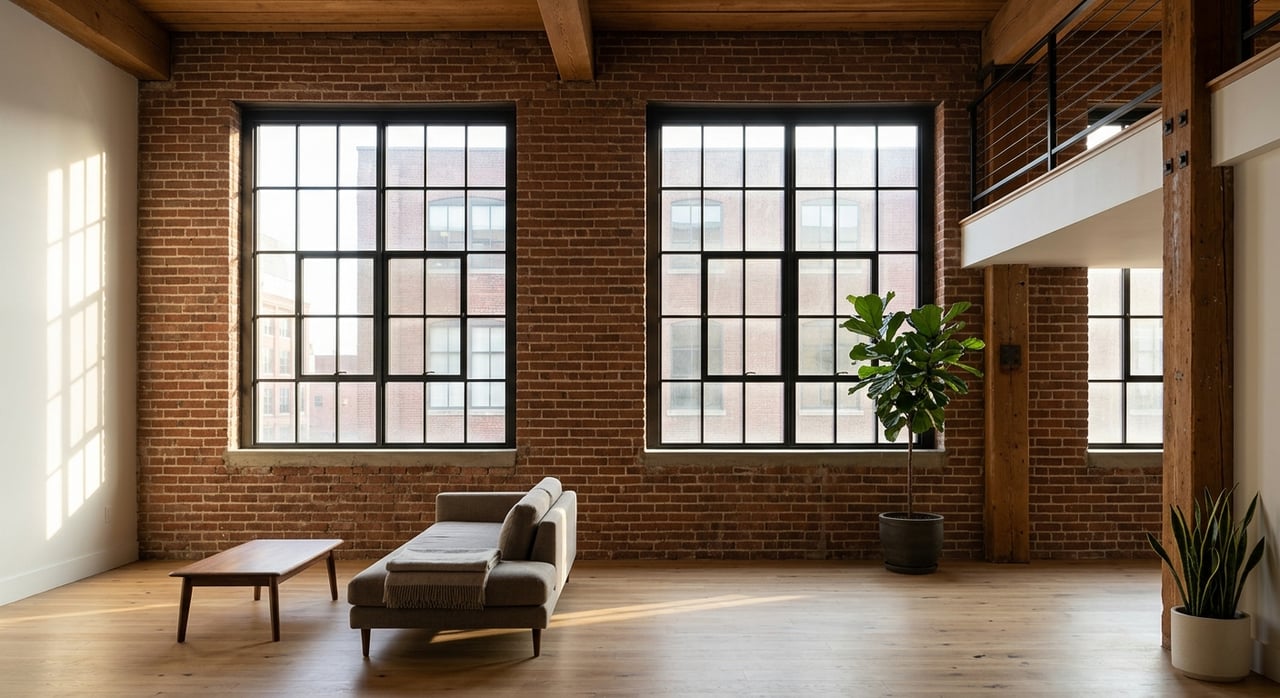
Bethlehem’s design guidance highlights traditional materials such as brick, wood, stone, and terra cotta, especially in historic South Bethlehem. It also emphasizes preserving original window patterns, transoms, cornices, and masonry wherever possible.
For you as a buyer, that often translates into a home with visual texture and architectural detail. You may find taller windows, older masonry, mixed-use streetscapes, or layouts shaped by the original building rather than by modern subdivision design.
Expect less standardization
A converted loft or home often feels more singular than a newer property. Room dimensions, ceiling heights, window placement, and circulation can all reflect the structure’s earlier life.
That uniqueness is often the point. If you value craftsmanship, historic materials, and a home with a story, Bethlehem offers a setting where those qualities are part of the local built environment rather than an exception.
Where this lifestyle stands out most
While character properties appear across Bethlehem, the city’s adaptive-reuse energy is especially visible in the SouthSide Arts District. A city-retained retail study defines this district as running roughly from SteelStacks north to the river, east to Wind Creek Bethlehem, west to Broadhead Avenue, and south toward the Zoellner Arts Center and Lehigh University.
The same study notes that most retail and restaurants are concentrated on Third and Fourth Streets, with the South Bethlehem Greenway through the center. It also describes the district as highly walkable, with a Walk Score of 95.
SouthSide Arts District
If you picture loft-style living in Bethlehem, this is often the setting people have in mind. SouthSide combines historic commercial and industrial architecture with arts, dining, trails, and an active street presence.
SteelStacks is a major anchor in that story. ArtsQuest describes it as a 10-acre campus on the former Bethlehem Steel site and a brownfield redevelopment success story, which reinforces how deeply reuse is woven into the area’s identity.
North Side historic context
Bethlehem’s historic character is not limited to its industrial past. The Historic Moravian Bethlehem District was added to the UNESCO World Heritage List in 2024, reinforcing the city’s importance as a preserved heritage setting.
For you, this creates a useful contrast. North Side living may feel more rooted in Bethlehem’s colonial and heritage-centered history, while SouthSide often presents a more industrial and arts-driven atmosphere.
The lifestyle benefits of a converted home
A converted home or loft can offer benefits that go beyond square footage. In Bethlehem, these homes often place you close to established streetscapes, local businesses, trails, and cultural destinations rather than in a newer, more uniform setting.
If you enjoy architecture, walkability, and spaces that feel individual, that can be a meaningful advantage. Bethlehem’s trail system includes places like the South Bethlehem Greenway, Sand Island Trail, Monocacy Way Trail, and South Mountain Park, adding to the appeal of an in-town lifestyle.
Another benefit is emotional value. A well-chosen converted property can feel more personal because it carries visible signs of age, craftsmanship, and adaptation over time.
Practical issues to review before you buy
The qualities that make converted homes appealing can also make them more complex. In Bethlehem, your due diligence should go beyond finishes and floor plans.
Historic review matters
Many conversion properties sit in areas where exterior changes are subject to review. The city states that a Certificate of Appropriateness is required before a building permit in its special historic districts.
North of the Lehigh River, exterior changes in the Bethlehem Historic District go through HARB review. In South Bethlehem and Mount Airy, the Historic Conservation Commission handles review.
The city also notes that zoning is the first step for most projects. If you are thinking about making changes after purchase, this is one of the first practical conversations to have.
Parking deserves early attention
Parking can be a real quality-of-life issue in older, denser parts of Bethlehem. The city’s Residential Permit Parking ordinance exists to reduce parking hardship, but it also clearly states that a permit does not guarantee or reserve an on-street space.
That means you should treat parking as a front-end due diligence item, not an afterthought. Ask how the current owner manages parking, whether off-street options exist, and how the block functions at different times of day.
Maintenance may be more nuanced
Historic and converted properties often call for more thoughtful upkeep than a newer home. Bethlehem’s design guidelines encourage retaining existing windows and roof forms where possible and note that replacing large or unusually shaped windows can be costly.
The same guidelines discourage visually incompatible materials like vinyl or aluminum siding in reviewed contexts. In practical terms, that means repair and replacement decisions may involve both higher craftsmanship standards and local design expectations.
Who tends to enjoy this kind of property
Converted homes and lofts are often a strong fit if you care more about character than standardization. You may be especially drawn to this lifestyle if you value original materials, urban walkability, and architecture that reflects Bethlehem’s long history.
These properties can also appeal to buyers who are comfortable asking deeper questions before they purchase. If you appreciate the importance of zoning, preservation review, maintenance planning, and building history, you may find that Bethlehem’s converted inventory offers real long-term appeal.
At the same time, this is not always the easiest path for a buyer who wants a simple, low-maintenance, highly predictable home. The tradeoff for uniqueness is often a more layered ownership experience.
How to think about the tradeoff
The best Bethlehem conversions tend to reward buyers who know what they value. If you want a home that feels singular, tied to place, and connected to the city’s larger story, a loft or converted property can be deeply satisfying.
But it helps to go in with clear eyes. Approvals, maintenance realities, and parking logistics are not reasons to avoid these properties. They are simply part of evaluating them well.
That is especially true in a city where reuse is part of the civic fabric. Bethlehem offers a compelling setting for this style of living precisely because history, preservation, and reinvention all coexist here.
If you are considering a converted home or loft in Bethlehem, it helps to work with someone who understands not just aesthetics, but also the practical side of unique properties. To explore distinctive opportunities in Bethlehem and the Lehigh Valley, start a confidential conversation with Petrina Calantoni Unger.
FAQs
What is a converted home in Bethlehem?
- A converted home in Bethlehem is typically a residential property created from a building that originally served another use, such as industrial, commercial, or institutional space.
Where are loft-style homes most common in Bethlehem?
- Loft-style living is most visible in and around the SouthSide Arts District, where adaptive reuse, walkability, and former industrial settings are central to the area’s identity.
Are historic rules important for Bethlehem converted properties?
- Yes. In Bethlehem’s historic and conservation districts, exterior changes may require review, and a Certificate of Appropriateness is required before a building permit in special historic districts.
Is parking a concern for older Bethlehem neighborhoods?
- It can be. Bethlehem’s permit parking system may help reduce hardship, but a permit does not guarantee or reserve an on-street parking space.
Do converted homes in Bethlehem require more maintenance?
- They can. Historic materials, preserved windows, older masonry, and design-review expectations may make maintenance and replacement decisions more specialized than in a newer home.
Is a converted loft in Bethlehem a good fit for every buyer?
- Not always. These homes often appeal most to buyers who value character, walkability, and individuality and who are comfortable with more detailed due diligence.